

The Unfolding Shape
Learning to trust the story of my motherhood and my children's childhood

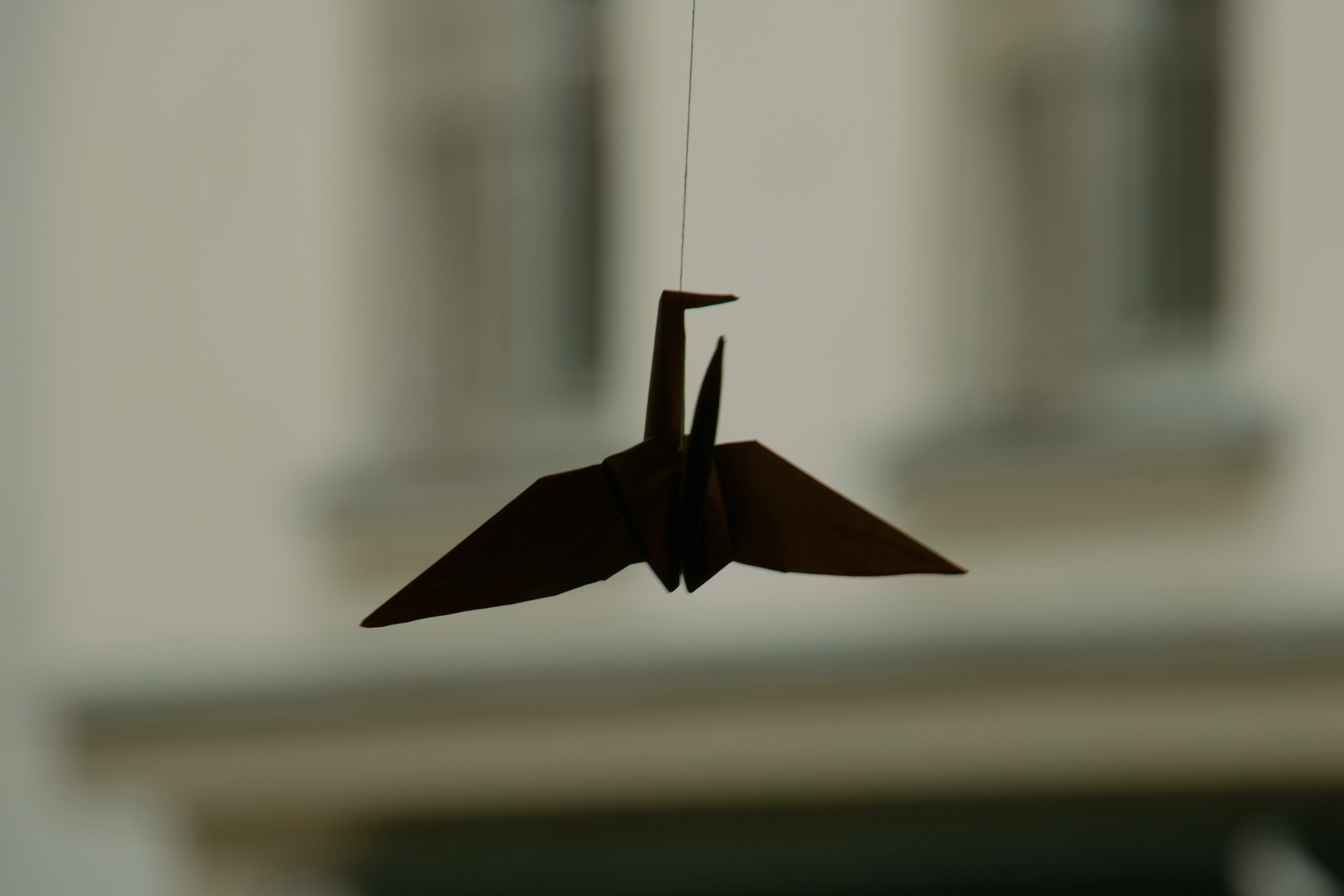
The night you go missing in the city, I stay awake until two in the morning.
When I do finally sleep, it is restless. I dream about train tracks, the river, the dark, dark woods.
Twenty-four hours earlier, at your house, I try to decide.
What does it mean to tell someone you love them if they cannot hear you—if they will not remember?
Staring at the shadowy trees out your windows, all I can think of is that stupid question:
If a tree falls in a forest and nobody is around to hear it, does it make a sound?
On my drive home, I watch for deer. Sometimes I can spot them in the dark, bright eyed and startled at the edge of the woods, their babies tucked behind them in the thinning winter branches.
A man at the nature center told me just this week that the colder it gets, the more bare the woods become and the deeper the deer retreat into its branches.
At the end of the day, the man had said, the deer just want to feel safe.
Keep warm. Feed their young. Stay alive.
By the time I arrive back home I, too, can feel the sensation settling into my bones.
The urge to retreat. Withdraw. Bolt into the branches.
It is cold. I have children.
I just want to feel safe.

The thing about being a mother who has Witnessed Some Crazy Sh*t is that I will consider every possible future my beloved children might live, so that I am prepared should any of them happen.
It is terrible for my health, but I cannot seem to stop.
It’s like a frenetic scene in a Looney Tunes cartoon from the forties, where Bugs Bunny pulls objects out of a hat, each one more ridiculous than the last.
Look, look! Your children could have this kind of future, or this kind, or this kind!
(Cue my eyes bugging out of my head on springs).
I am aware now, more than ever, of the generations of story each of us hold in our bones, and I often wonder what pieces I am unwittingly carrying forward.
What is stitched together in my DNA? What is flowing, even now, through my bloodstream and my children’s?
Every day I study my face in the mirror and wonder if I’m hiding anything from myself.
Every day I put myself, again and again, on the stand. In the courtroom of my mind I am both the defense and the prosecution.
Have I loved my children enough? Have I been present enough? Have I listened enough?
Maybe if I drill down deep, if I excavate my motives until I’m raw, if I search for the thing underneath the thing—the faint pulse that drives everything else—maybe I can make sure the same terrible things never happen to my children.
Maybe I can keep them from the unthinkable parts of a family story that are still rippling out and out and out, even now.
We met when our babies were tiny.
Two new mothers sitting across from one another in a circle at the local yoga studio, bare breasts out, hair unwashed, our fears spoken tentatively into the space between us.
A week later, I learn she lives two blocks down the street from me.
That fall, we lay our babies on a blanket in her front yard and take turns saying, Oh my God, Oh my God, I don’t know what I’m doing.
We agonize over how to feed our babies solid food, how to get them to sleep, how to set boundaries without squashing their spirits, how to keep our marriages alive in the slog of raising young children.
For seven years, we parent through some of the most frightening moments in our community’s history.
The pandemic. Special ordering tiny toddler face masks from Etsy. Pressing the soft cotton fabric across their impossibly tiny faces.
The murder of George Floyd three miles away. The riots, the smoke, the boarded up buildings. The drone of helicopters drowning out our white noise machines, our children sleeping soundly in their cribs.
The Annunciation School shooting, two blocks down the street. Both of us huddled in her living room watching mothers abandon their cars and run, neighbors standing frozen on their lawns, hands over mouths.
The fragmentation of our families. Mental illness. Compulsion. Addiction. How to hold both love and fury. How to carry both a bird and a stone in our bodies. How to not kill the bird with the stone.
Seven years of standing in her front yard saying, Oh my God, Oh my God, I don’t know what I’m doing.
Seven years of holding our babies close, memorizing the shape of them, witnessing their becoming.
Seven years of promising over and over to give them the whole, wide world, and then—just as often—wishing we could take that promise back.
My friend and I walk around the mall, each sipping an overpriced green juice, like some sort of caricature of elder millennial, middle class moms.
She tells me all the ways she has tried to make sure her child does not inherit the shadowy parts of her family’s history. All the ways she has reigned in her own worst impulses, worked for her own healing, moved heaven and earth for him.
She tells me all the ways she sees him carrying some of those parts forward, anyways.
I nod furiously along with her words—words she might as well have taken from my own mouth. I have had this same thought about my children a thousand times.
“I know, I know.” I say. “Epigenetics, I think. It’s a thing.”
“Yeah,” she says. “I really do believe in that sh*t.”
We take a sip of our green juices, pause outside a baby clothing store. I follow her eyes to the tiny outfit hanging in the window.
“He was part of my body.” She says.
“My body.”
The first thing I thought when I grabbed my newborn baby’s slippery body and pulled her out of the water:
I know her.
The words flew so unbidden into my mind, it was as if they were coming from my body on a cellular level.
I know her. I know her.
Sometimes when I lie awake fearing every potential future my children might have, I think about that moment.
How the unfolding shape of my children’s childhood—the unfolding shape of my own motherhood—began like this.
A fierce recognition.
A naming.
The day I find out you’re safe—alive—I sleep and sleep and sleep.
I do not dream about train tracks, the river, the dark, dark woods.
I do not dream at all.
Later, my husband orders African take-out for dinner. My second-grader wants to know why the flatbread does not come with mango chutney like it did when she tried it at her school for “Culinary Adventures in Africa” day.
This particular child gets stuck in very particular loops and cannot let things go until the loop has completed at least 100 times.
Like a ferris wheel, but less fun.
“Honey, I don’t know,” I tell her. “I don’t think they have it at this restaurant.”
The child shoves a handful of flatbread into her mouth and proceeds to ramble on about how unfortunate it is that this restaurant does not have any mango chutney and did we know that it’s actually very easy to make and next time we need to make it and also am I sure that I didn’t see any when I traveled to Kenya in college?
I cup my hand around the side of my face and cross my eyes at my husband, but who am I kidding. I love her so much. Every single weird quirk about her. I want to keep her like this forever—rice sticking to the corners of her mouth, blissfully unaware of dinner table social norms, hyperfixating on a random East African dish.
I wrap my arms around her, press her head into my chest, her silky blonde hair fringed at her collarbone, her cheekbones growing more angular every day.
Do you know that you’re a good kid? I ask her. Do you know that you’re basically the most beautiful person I’ve ever met?
When I say the words, I am so fervent and eager, they might as well be vows.
I wonder if it’s possible to pour so much love into a child, they do not easily forget it in twenty years.
I do, she says.
I do.
Every year around this time I watch the movie, The Holdovers.
In the film, a high school student named Angus must remain at his boarding school over Christmas Break, chaperoned by the grumpy history teacher, Professor Hunham. Over the weeks, Angus and Hunham form an unlikely bond. After convincing Hunham to take him to visit his schizophrenic father in a nearby psychiatric hospital, Angus confesses his greatest fear: that he will turn out to be just like his father.
That he will spend his whole life following himself around like a shadow, fearing what lies dormant in his own body.
No, no, no, Hunham reassures him. That will not happen.
When Angus asks how he knows for sure, Hunham responds:
In other words, our origins do not define us.
The blood rushing through our veins does not decide who we become.
We do.
One December afternoon, I stand over the bathroom sink, my four-year-old balanced precariously on the step stool in front of me, perched on her tiptoes to study her reflection.
I watch her eyes flick back and forth between her face and mine. Her eyes and mine. Her hair and mine.
For years, she has heard family and friends say how much she looks like me when I was a little girl.
“Mama?” she asks me, brow furrowed. “When I get big…will I turn into you?”
My eyes meet hers in the mirror.
“We do kind of look similar, don’t we?” I say. “But no. You will not turn into me when you grow up.”
I pause, thinking.
“Do you know who you will be when you grow up?”
She turns away from the mirror to look at me—curious—and I smile before answering.
“You.”
*Title Image by Miguel Alcântara on Unsplash
Gorgeous, Krista.
Well 💛 going to be thinking about this one for awhile, lady.